The Mystery Project

Art ~ Magic ~ Mysticism

Liberation Cinema

by admin on November 3, 2013, no comments

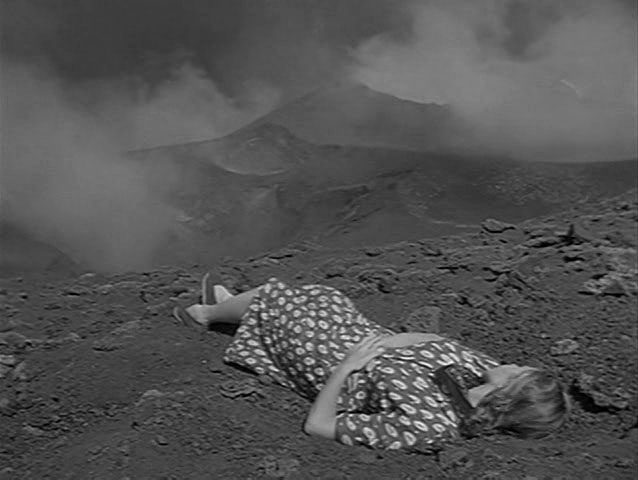
Ingrid Bergman in still from Roberto Rossellini's "Stromboli," 1950.

Ingrid Bergman in still from Roberto Rossellini’s “Stromboli,” 1950.

Rossellini’s Ten Commandments
Roberto Rossellini’s Ten Commandments on film-making he gave to his students at the Centro Sperimentale,

1. The camera is a pen, a plain ordinary Bic, easy to use. It’s enough to know what you want to say – if you have something to say.
2. The camera is a paper tiger. Don’t mythify it.
3. Therefore the image must exist first in your head. The camera can’t substitute for the absence of an image in your head. Therefore learn to think in images; it’s useless to expect miracles from the camera. ‘You really have to reduce filming to the simplicity of a pencil, so you have no more worries about the medium and all your worries can concern your thoughts.’
4. Making films is easy. People say it’s difficult in order to stop you.
5. When I say film I don’t mean commercial cinema, which is dead, and only good for letting filmmakers tell themselves, ‘Ah! How wonderful I am!’
6. Make films that will be useful for others, not for yourself.
7. What’s useful? Knowledge, without which we’d be beasts. The brain is used to think with, not just to wear a hat.
8. Using film to spread knowledge means doing research. Ideas and subjects aren’t invented by moonlight but in the library.
9. I don’t like being known as a director. I prefer to be a good pilot, a man. The principal craft is to be a man, curious, fascinated, responsible, occupied with the problems of the world.
10. My only role here is the guardian of your liberty.

After The Persian

by admin on October 19, 2013, no comments

Persian Unicorn

After The Persian
by Louise Bogan

1

I have wept with the spring storm;
Burned with the brutal summer.
Now, hearing the wind and the twanging bow-strings
I know what winter brings.

The hunt sweeps out upon the plain
And the garden darkens.
They will bring the trophies home
To bleed and perish
Beside the trellis and the lattices,
Beside the fountain, still flinging diamond water,
Beside the pool
(Which is eight-sided, like my heart).

2

All has been translated into treasure:
Weightless as amber,
Translucent as the currant on the branch,
Dark as the rose's thorn.

Where is the shimmer of evil?
This is the shell's iridescence
And the wild bird's wing.

3

Ignorant, I took up my burden in the wilderness.
Wise with great wisdom, I shall lay it down upon flowers.

4

Goodbye, goodbye!
There was so much to love, I could not love it all;
I could not love it enough.

Some things I overlooked, and some I could not find.
Let the crystal clasp them
When you drink your wine, in autumn.

Year of the Witch

by admin on October 19, 2013, no comments

Remedios Varo. Still Life Reviving. 1963.

Remedios Varo. Still Life Reviving. 1963.

“The archetype of the witch is long overdue for celebration. Daughters, mothers, queens, virgins, wives, et al. derive meaning from their relations to another person. Witches, on the other hand, have power on their own terms. They create. They praise. They commune with nature/spirit/God/dess choose-your-own-term-semantics, freely and free of any mediator. But most importantly, they make things happen. The best definition of magic I’ve been able to come up with is “symbolic action with intent” — “action” being the operative word. Witches are midwives to metamorphisis. They are magical women, and they quite literally, change the world.”

Pam Grossman, from Reality Sandwich

The Flowers of St. Francis

by admin on August 4, 2013, no comments

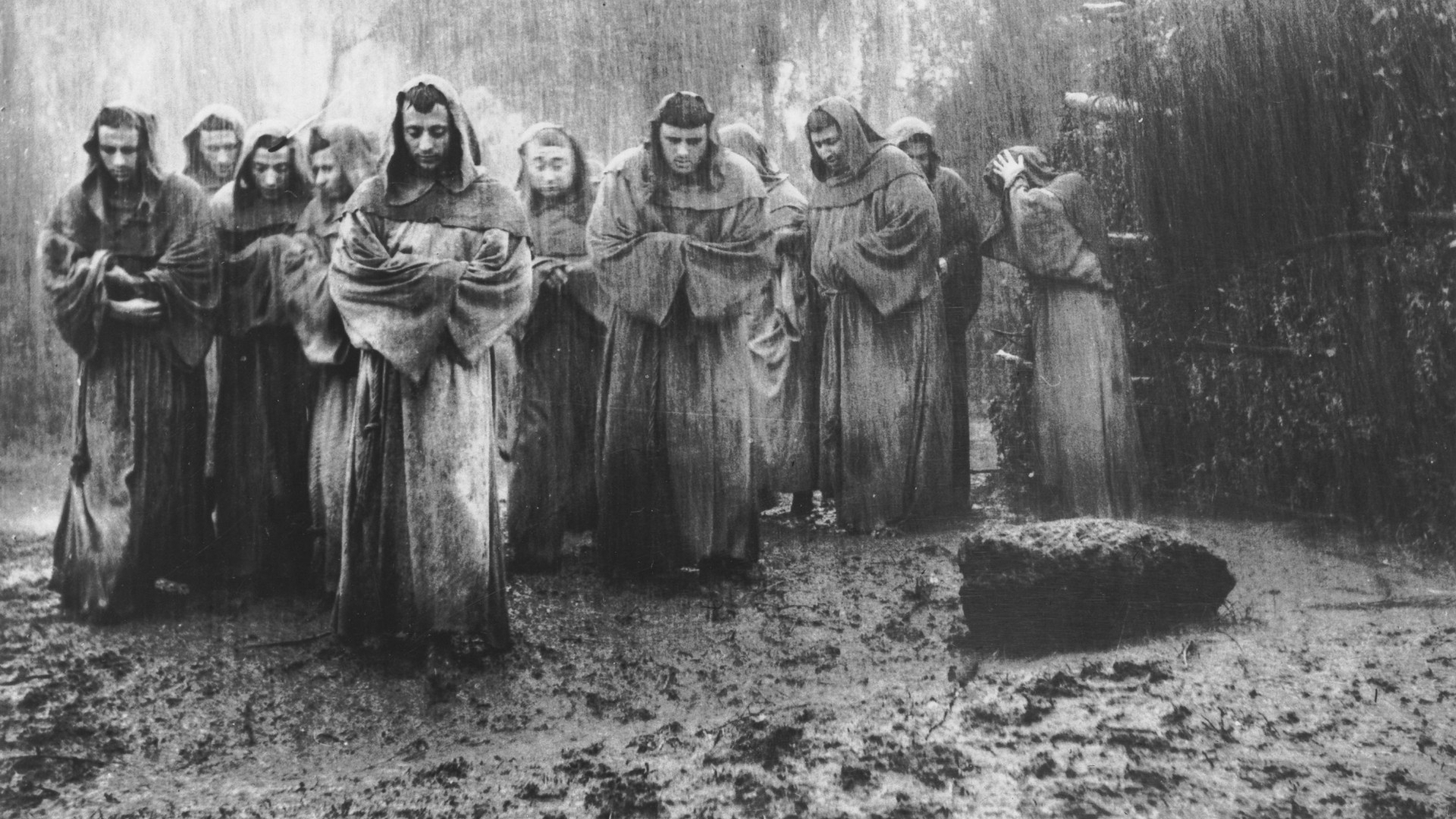
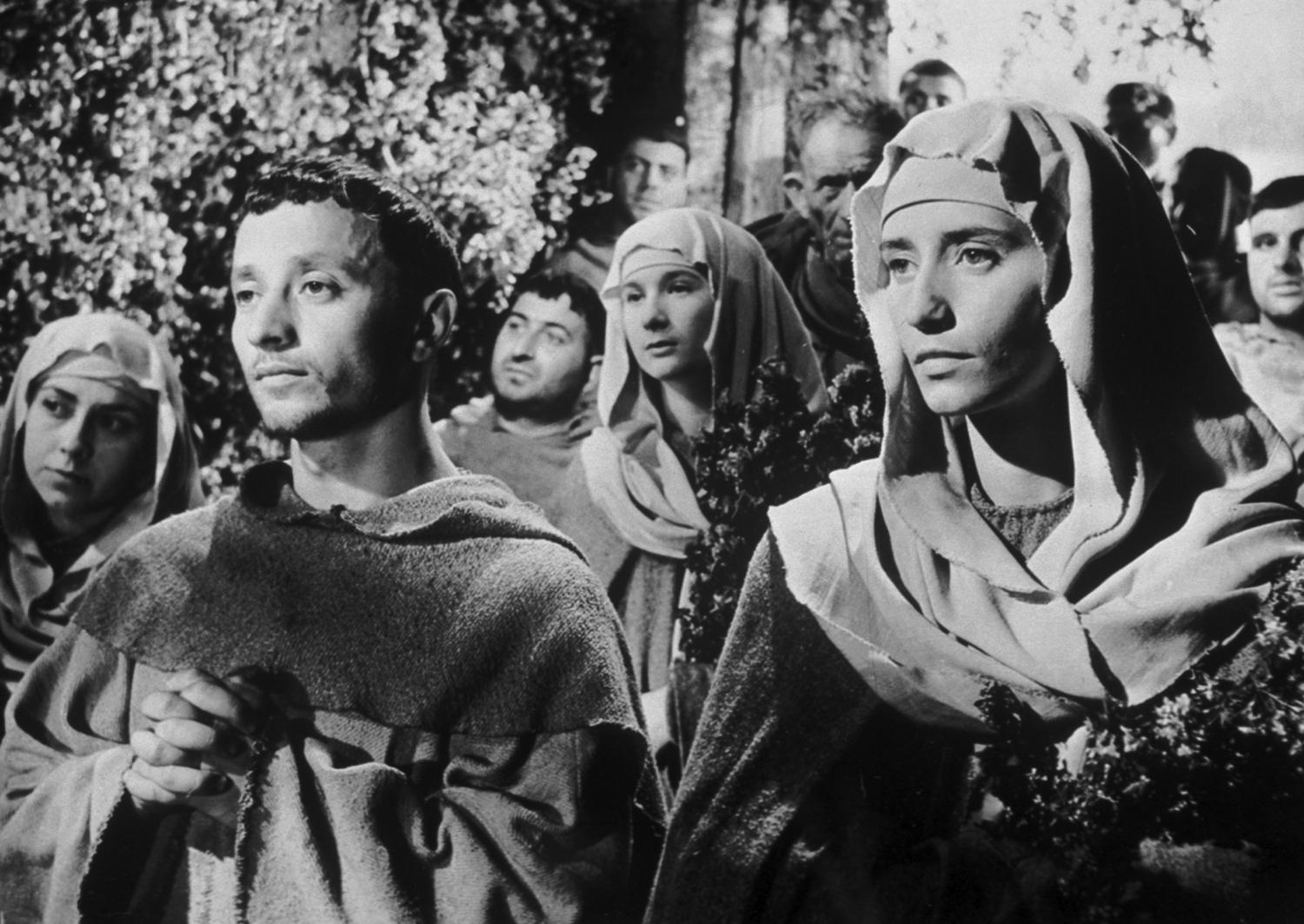
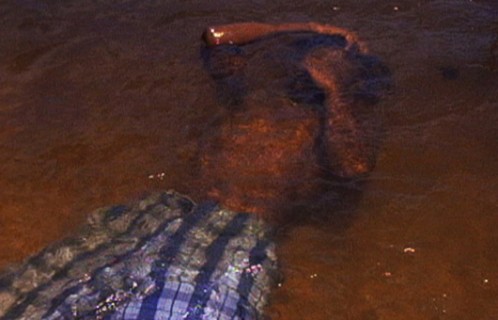
Still from Rossellini's The Flowers of St. Francis, 1950

Still from Rossellini’s The Flowers of St. Francis, 1950


Still from Rossellini's The Flowers of St. Francis, 1950

Still from Rossellini’s The Flowers of St. Francis, 1950


Still from Rossellini's The Flowers of St. Francis, 1950

Still from Rossellini’s The Flowers of St. Francis, 1950

Not only is Roberto Rossellini’s 1950 film The Flowers of St. Francis just outrageously beautiful, not only does it have tons of charm and that yummy scratchiness in the audio track, but it’s also surprisingly funny.

Powers vs. Beings

by admin on August 4, 2013, no comments

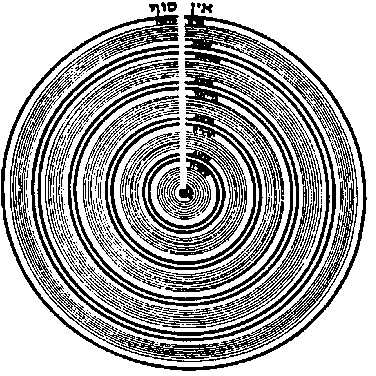
Kabbalah - Ein Sof and angelic hierarchies (Universes or olamot)

Kabbalah – Ein Sof and angelic hierarchies (Universes or olamot)

Our modern science acknowledges a Supreme Power, an Invisible Principle, but denies a Supreme Being, or Personal God. Logically the difference between the two might be questioned; for in this case, the Power and the Being are identical. Human reason can hardly imagine to itself an Intelligent Supreme Power without associating it with the idea of an Intelligent Being. The masses can never be expected to have a clear conception of the omnipotence and omnipresence of a Supreme God, without investing a gigantic projection of their own personality with those attributes. But the kabbalists have never looked upon the invisible En-Sof [God prior to manifestation of the universe] otherwise than as a Power.
— Helena Blavatsky, Isis Unveiled, Chapter 1

Just because we humans often don’t have the imagination to conceive of God as something other than a big, grouchy, capricious representation of ourselves doesn’t change the fact that the Supreme Power that animates the universe and bubbles in all life does not exist. Unhidden. In a state of glorious being for each of us to behold, for each of us to feel blazing through us, always and everywhere.

Drunk on the Wine of the Beloved

by admin on August 4, 2013, no comments

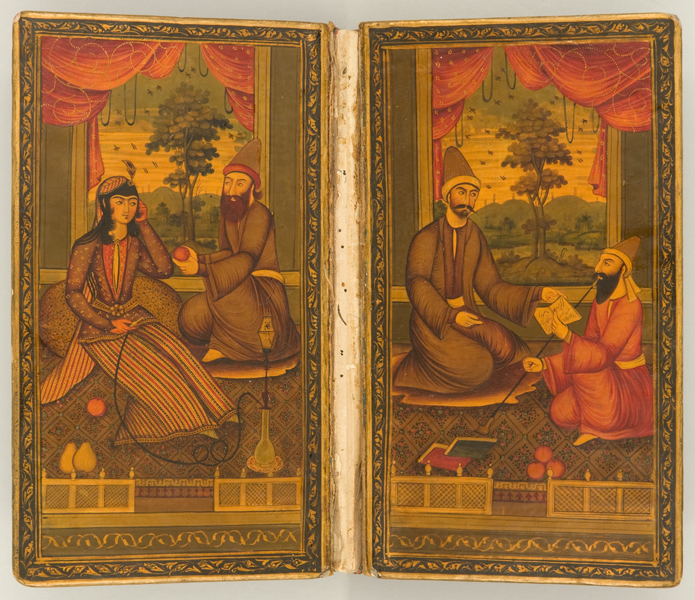
Divan of Hafiz

Divan of Hafiz includes paintings on its doublures. Calligraphy by Muhammad Hasan ibn Muhammad ibn Mulla “[Najm]”. Iran, 1842.

Drunk on the Wine of the Beloved Look at This Beauty The beauty of this poem is beyond words. Do you need a guide to experience the heat of the sun? Blessed is the brush of the painter who paints Such beautiful pictures for his virgin bride. Look at this beauty. There is no reason for what you see. Experience its grace. Even in nature there is nothing so fine. Either this poem is a miracle, or some sort of magic trick. Guided either by Gabriel or the Invisible Voice, inside. No one, not even Hafiz, can describe with words the Great Mystery. No one knows in which shell the priceless pearl does hide. - Translation by Thomas Rain Crowe

Why We Need Urban Shamans

by Amanda on July 26, 2013, no comments

Shamanic Rite
We need more shamans in Los Angeles. In all the cities across America. Shamans and mystics are important because they are interpreters of microclimates within our communities. Shamans cultivate their own personal relationships with the divine, with the fundamental principles of life. Their ability to find meaning within the mysteries of the universe, rather than through sanctioned books and renowned figures, necessarily destabilizes authoritarian power structures. Because these shamans are “of” the communities they engage with, they intimately know the anxieties, concerns, needs and aspirations of the people around them. These relationships stand in stark contrast to the superficial knowing coveted by the dominant power structures. “They” (insert hegemonic figure here) want to know us so they monitor our emails; they tally our likes on Facebook. They post notices on the sidebar of our Gmail accounts to exploit that knowing. The people who might be able to, or even are already, functioning as shamans within our urban framework are often encouraged to fall in line with a certain orthodoxy. An organized religion, for example. Become a priest or a minister if you feel the calling, but only work under the umbrella of the sanctioned truths.

Many people with innate shamanic abilities in our culture are drawn to the arts, shaman artists are often encouraged to make work that functions comfortably within the orthodoxies of the market. This “encouragement” towards market driven orthodoxies often comes in the guise of financial pressure, such as the crushing weight of student loan debt, or just needing to be able to have shelter and eat (the threat of homelessness is a great way to get people to stop worrying about the meaning of life, or the purpose of working their ass off at some desk job). Urban shamans can also be encouraged towards orthodoxy by the social pressure of “success.” An artist is considered successful when they demonstrate their value through the number of connections they have to powerful people within their communities. Because artists who do not come from wealthy families are particularly vulnerable to being overwhelmed by market oriented forces within our culture, they can be particularly hungry for success and powerful social connections, without which it can feel like they are being threatened with the void of outer darkness. We need to practice our shamanic skills. To be comfortable in the upper and under realms, the spirit worlds, and the earthly ones. To not be afraid of all the threats that the orthodoxies will throw at us. Our world needs shamans now, in every house and on every block. And in contemporary urban culture, it is a rare and lucky find when we are provided with a shamanic mentor. So we have to help each other. To cultivate each other as prophets. To lead each other through the spirit worlds and help one another re-enchant the earthly realms. When our spell is complete, everyone on earth will be a shaman. And no authorities will threaten us. And life on earth will be safe and thrive.

“Shamans seem to flourish, as might be expected, mainly among people whose religion is not highly organized and whose social structure is also simple and loosely knit. Something that can be called shamanizing often exists in other cultures and cults, but when it does, it is apt to be subservient to some higher political or religious authority. A true shaman is a lone wolf, following his own dictates, and so a well-developed cult, with important gods in it, cannot tolerate any such freebooting approach to the supernatural, and is bound to restrict this kind of activity, and to deprecate the importance to shamans, mediums, and their like.” — William Howells, The Shaman: A Siberian Spiritualist

Weird Music: Saint Judee Sill

by Amanda on July 13, 2013, no comments

Sill’s biography strewn with tragedy: family deaths, drug addiction, horrible accidents, poverty, maybe prostitution. She died in 1979, 34 years old, drug overdose. But in this turbulent life of hers she managed to be in communion with beauty, and to create from all life’s sorrows and trouble these artifacts of exultation. Sad stories are built into our family histories, into history itself. Afterall, history is the story of human beings and all the sad things we do to one another. So thank you, Judee Sill, wherever you are, for managing to do the work of creation despite all your suffering.

Here’s to all the artists of the world who are able to create so much to love, somehow, while they’re blazing through all the turbulence in the atmosphere of human history.

Shamanic Cinema: Ben Russell’s River Rites

by Amanda on July 6, 2013, no comments

Ben Russell, "River Rites"

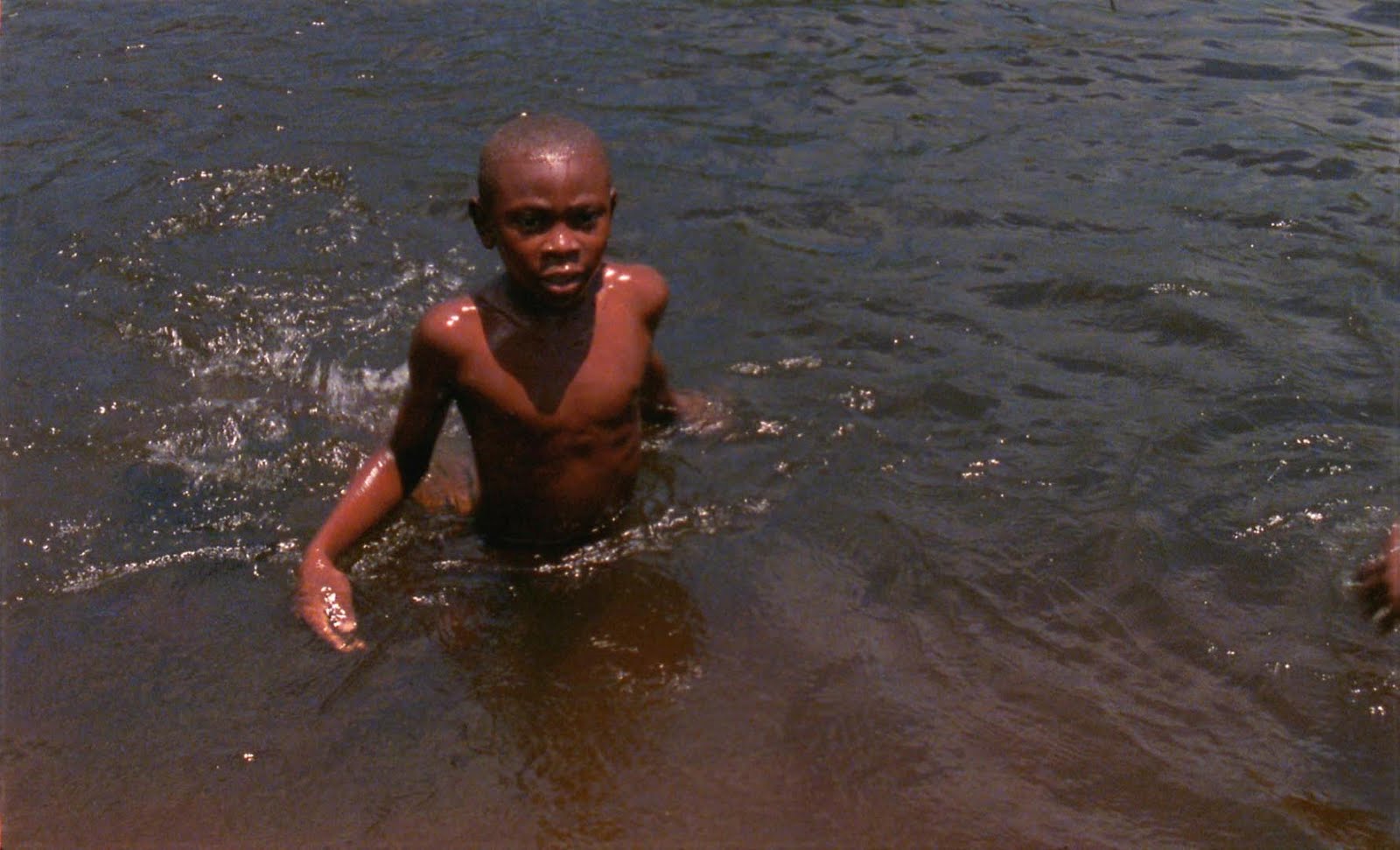
Film still from Ben Russell’s “River Rites,” 2011

“The real skill of the practitioner [of magic] lies not in skilled concealment but in the skilled revelation of skilled concealment. Magic is efficacious not despite the trick but on account of its exposure.”
— Michael Taussig, from the essay Viscerality, Faith, and Skepticism: Another Theory of Magic

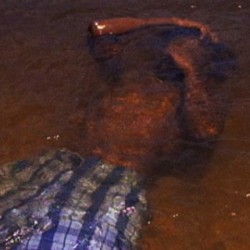
River Rites exposes three realms of existence, and filmmaker Ben Russell leads us through all of them. The first realm is the world of the subjects of the film, a small community of Saramaccan animists at a sacred river in Northern Suriname. We, the audience, witness a world that is lushly sensorial. The sound of rushing water through the reeds conjures its coolness; our toes almost squish the red clay, almost feel the grit of the stone where the water drips. But as soon as an inhabitant of this world appears, we know this place does not belong to us, and we remember that we are not really there. The first subject that we see is a shirtless Saramaccan man in his early thirties, his solemn expression surprising for someone found frolicking in a river on a warm day. A toddler enters his arms and they both turn to look directly into the eye of the camera, our eye. The expression implied by his gaze is ultimately unknowable, just as the gaze of every “other” is – maybe even the one we see in the mirror. But the stare of this man is so intense and serious. Is it a confrontation? An accusation? Suspicion? Whatever it is, it doesn’t suggest that he is gazing at someone who is a member of his “tribe”. All of this underscores the ultimate “otherness” not only of the man and the child that he holds, but also of the space they inhabit. We, most likely a Western urban audience who appreciates experimental ethnographic filmmaking, are not of his world. We are just visiting, watching, and we both know it. The Saramaccan gazes through the camera, to us, to our world, where we sit in the dark.

So the second realm then, is the realm of the audience. There we are, together. Our own little tribe of folks. In a ritualized setting, a darkened theater. The silent hush of the audience. The click and whir of the projector. Since I saw River Rites at REDCAT, an arts venue in downtown Los Angeles whose audience is made up to a large degree by Cal Arts students, faculty, alumni, and the people who love them, we truly are a clan of familiars. We all know the ritual, and partaking in that ritual is partially why we go to the cinema. In addition to the pleasure of looking at flickering images, going to the cinema is about reinforcing a sense of community, a sense of personal identity, the reification and expansion of our world view. This is us, this is our people, this is what we’re into. That’s how ritual functions in all cultures to some degree; spirit possession is not just about spirit possession, it’s also about community identity.

Ben Russell, "River Rites"

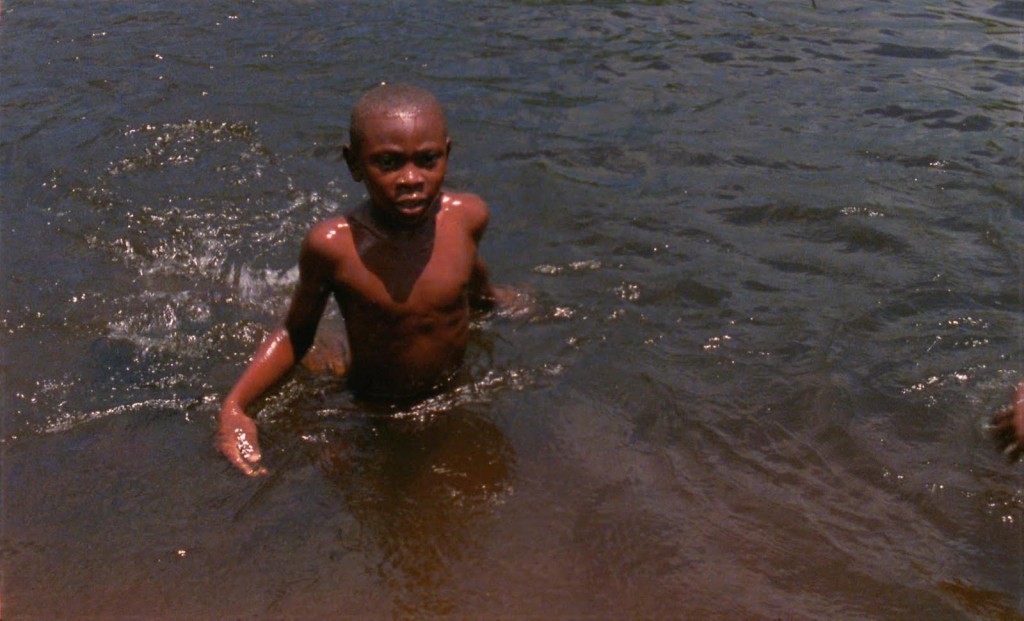
Film still from Ben Russell’s “River Rites,” 2011

Russell, who was there at the screening and gave a Q&A, is clearly very aware of the cultural anthropology of filmmaking. He follows in the tradition of Jean Rouch, a tradition that problematizes the subject/object, observer/observed methodology of documentary filmmaking, and classical anthropology in general. Furthermore, many of his other works document the ritualistic, often ecstatic, actions and events within North American culture. An acid trip in the Badlands of Montana. A slamdance noise concert in Rhode Island. All of these in his Trypps series that document, as the name implies, people journeying through different levels of consciousness. But he doesn’t just document these states, as a filmmaker he creates them.

Here we arrive at the third realm of River Rites, the cinematic realm. This is the world that no living subject inhabits, not the audience, nor the subjects of the film, not even the filmmaker. This realm is made up of the cinematic elements, light, sound, it travels through the cinematic apparatus: the camera, the editing software, the sound recorder, the projector. It exists purely in its immanence, inside its physical properties. The realm of the apparatus of cinema is what makes the viewing of it possible, there is no cinema without it. And yet, it is also the one place we as viewers can’t go. We can witness this realm and know it’s there, but we can’t travel through it. We only experience its residues.

So, sitting in our realm of darkened theater, we absorb the reflection of light and waves of sound from the second realm, the cinematic apparatus, through which the vision is conjured of the third realm: the river in Suriname. But this third realm is not the actual river, who we see are not the actual people there, the filmmakers eye and skillful manipulation tricks us into thinking we’re witnessing the real thing, but in fact what we see and hear is the collaborative vision of all three realms of cinematic existence. Here we hover then glide between the reeds. Things are calm, the river flows, children wade, foliage rustles. Then, in psychadelic parlance, we begin to peak. The growing sense of urgency comes as the movements of the children get faster. Menacing noise music comes thundering in, grinding us like sand beneath a wave. The water frothes and bubbles, spewing out children who are thrown backwards, spirited out of the river to land upright and sure footed on the rocks. The subjects exclaim exuberantly in a language we don’t understand, and because of the clearly foreign landscape, we don’t expect to. But even if the children were speaking English, we still wouldn’t understand because the film is being played backwards, which we don’t realize at first. The entire film is executed in a single take so the artifice of the cinema created through editing is not immediately apparent. Until it is. Until it slowly becomes undeniable. And the degree of control and manipulation utilized by the filmmaker becomes a powerful, enjoyable joke. Up until this point we’d forgotten how we were being manipulated. We ignored how our gaze had been completely controlled. But small revelations, increasingly difficult to ignore, begin to make us aware that we are dreaming.
Ben Russell, "River Rites"

Film still from Ben Russell’s “River Rites,” 2011

For example, we wanted to scan the environment, to turn around, to get an establishing point of view. But the frame is held tight, he won’t let us step back or turn our heads; we can only see the things that flow in and out of the frame of their own volition. The water folk careen through the mise en scene, spin through it, fly out like river birds. And we know it’s only a trick of the technology that makes the figures fly. And we know the noise music, added in post by the filmmaker, is serving to create a moment of great power and intensity, and is not actually native to the world of the subjects of the film. And finally too, we realize the film is being sped up and slowed down: time is being manipulated mechanically by the filmmaker. All the cinematic devices and techniques are being used to create this third world. We know this. And yet we believe the trick. And as long as the trick is executed well, and the seams aren’t too apparent, we will believe it, we want to believe it. We need it. We are witnesses to the shaman filmmaker’s fictional world, but we will go along with the illusion as long as the distraction is complete and we are taken in. It’s the manipulation of these different realms, their layering, their skillful revelation and concealment, that gives River Rites such power.

What’s interesting for me is this: in the West we often think of shamanism as something that is taking place in an “other” culture, something that is the exotic subject of ethnographic filmmaking. Ben Russell’s work makes very apparent that we are engaged in those same practices here within our own communities, whether it’s through the stress induced ecstasy of a slamdance concert, or the suspension of reality that occurs in a movie theater on the corner of First and Hope. The magic of art is that it makes visible the things hidden in plain sight. It creates new worlds, documents foreign realms, and those so familiar and close that we aren’t even aware of them. The practice of artist as shaman then is to lead the audience through these different realms in way that brings about phenomenological, cognitive, and spiritual revelation – in this Ben Russell is one of the true masters.
Poet as Medium

by admin on July 4, 2013, no comments

Rudy Burckhardt

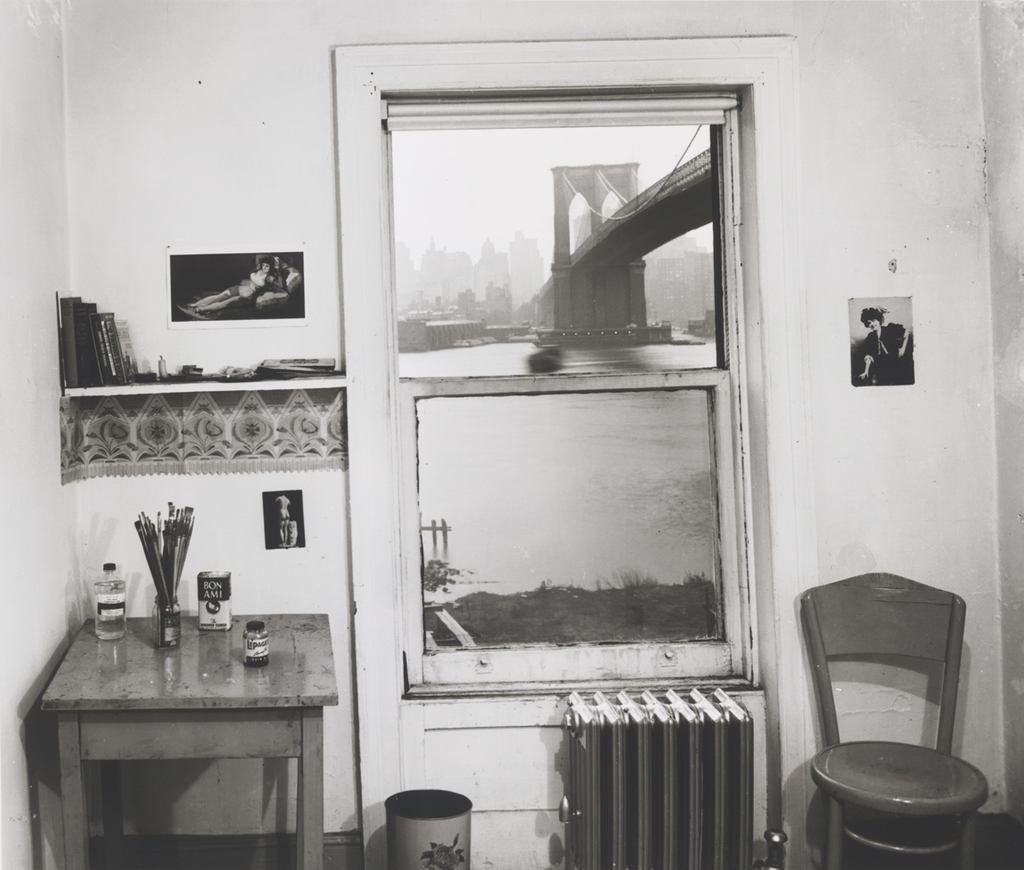
Rudy Burckhardt. A View From Brooklyn. 1954.

Phantasia For Elvira Shatayev

(leader of a women's climbing team, all of whom died in a storm on Lenin Peak, August 1974. Later, Shatayev's husband found and buried the bodies.) The cold felt cold until our blood grew colder then the wind died down and we slept If in this sleep I speak it's with a voice no longer personal (I want to say with voices When the wind tore our breath from us at last we had no need of words For months for years each one of us had felt her own yes growing in her slowly forming as she stood at windows waited for trains mended her rucksack combed her hair What we were to learn was simply what we had up here as out of all words that yes gathered its forces fused itself and only just in time to meet a No of no degrees the black hole sucking the world in I feel you climbing toward me your cleated bootsoles leaving their geometric bite colossally embossed on microscopic crystals as when I trailed you in the Caucasus Now I am further ahead than either of us dreamed anyone would be I have become the white snow packed like asphalt by the wind the women I love lightly flung against the mountain that blue sky our frozen eyes unribboned through the storm we could have stitched that blueness together like a quilt You come (I know this) with your love your loss strapped to your body with your tape-recorder camera ice-pick against advisement to guve us burial in the snow and in your mind While my body lies out here flashing like a prism into your eyes how could you sleep You climbed here for yourself we climbed for ourselves When you have buried us told your story ours does not end we stream into the unfinished the unbegun the possible Every cell's core of heat pulsed out of us into the thin air of the universe the armature of rock beneath these snows this mountain which has taken the imprint of our minds through changes elemental and minute as those we underwent to bring each other here choosing ourselves each other and this life whose every breath and grasp and further foothold is somewhere still enacted and continuing In the diary I wrote: Now we are ready and each of us knows it I have never loved like this I have never seen my own forces so taken up and shared and given back After the long training the early sieges we are moving almost effortlessly in our love In the diary as the wind began to tear at the tents over us I wrote: We know now we have always been in danger down in our separateness and now up here together but till now we had not touched our strength In the diary torn from my fingers I had written: What does love mean what does it mean "to survive" A cable of blue fire ropes our bodies burning together in the snow We will not live to settle for less We have dreamed of this all of our lives -- Adrienne Rich, 1974, "The Dream of a Common Language"